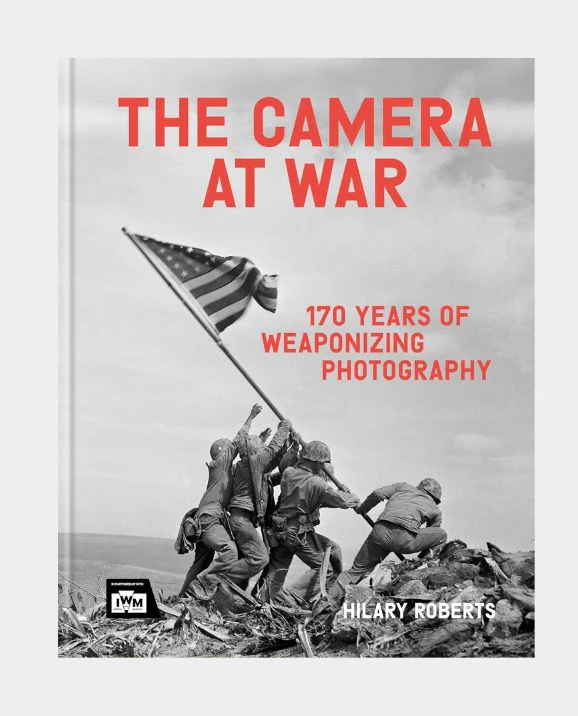
The Camera at War - 170 years of weaponizing photography
It is said that the first casualty of war is truth. But in the arena of war photography, the truth is never simple.
Drawing from the Imperial War Museum's extensive collection and global archives, Hilary Roberts offers a fresh insight into how image manipulation has shaped conflict photography over the past 170 years.
From staged Crimean War Daguerreotypes to today’s AI-crafted protest and propaganda images, this exploration reveals how meaning is added, erased, or altered. The Camera at War demonstrates how these changes sometimes bring us closer to truth, yet at other times serve national morale, deception, and control of the dominant story.
Original: $54.16
-65%$54.16
$18.96The Camera at War - 170 years of weaponizing photography
It is said that the first casualty of war is truth. But in the arena of war photography, the truth is never simple.
Drawing from the Imperial War Museum's extensive collection and global archives, Hilary Roberts offers a fresh insight into how image manipulation has shaped conflict photography over the past 170 years.
From staged Crimean War Daguerreotypes to today’s AI-crafted protest and propaganda images, this exploration reveals how meaning is added, erased, or altered. The Camera at War demonstrates how these changes sometimes bring us closer to truth, yet at other times serve national morale, deception, and control of the dominant story.
Product Information
Product Information
Shipping & Returns
Shipping & Returns
Description
It is said that the first casualty of war is truth. But in the arena of war photography, the truth is never simple.
Drawing from the Imperial War Museum's extensive collection and global archives, Hilary Roberts offers a fresh insight into how image manipulation has shaped conflict photography over the past 170 years.
From staged Crimean War Daguerreotypes to today’s AI-crafted protest and propaganda images, this exploration reveals how meaning is added, erased, or altered. The Camera at War demonstrates how these changes sometimes bring us closer to truth, yet at other times serve national morale, deception, and control of the dominant story.